Skip to content

Manufacturing robots · buyer guide

The line stays fed. The crew stays.

Cobots, AMRs, autonomous forklifts, and inspection and cleaning robots take on the repetitive, hazardous work you can’t staff. We pick what fits your line, fund it, deploy alongside production, and keep it running.

All 50
US states served
11+
years in the business
10 min
24/7 triage
24/7
emergency response
No. 01Your world

Manufacturing uses four robot categories: collaborative and industrial arms (cobots) for machine tending, palletizing, and welding; autonomous mobile robots (AMRs) and forklifts that move parts and pallets between cells and the dock; inspection and quality robots that catch defects and check confined spaces; and floor-cleaning robots for the plant floor. Service Robot Co. selects the mix for your process and cell layout, finances it, deploys alongside a running line, and services it nationwide so a down robot never stops production.

Discrete and process manufacturing is the original home of industrial robotics, and it is expanding fast into mobile robots, collaborative arms, and automated inspection as reshoring lands on a skilled-labor shortage. The defining choice on a plant floor is not one robot but the right mix for your cells: a cobot at a station, an AMR or forklift moving material between them, an inspection unit watching quality, and a scrubber on the aisles overnight. The decision that quietly sets total cost is whether a deployment can run alongside production or needs a shutdown. We weight that as heavily as the spec sheet.

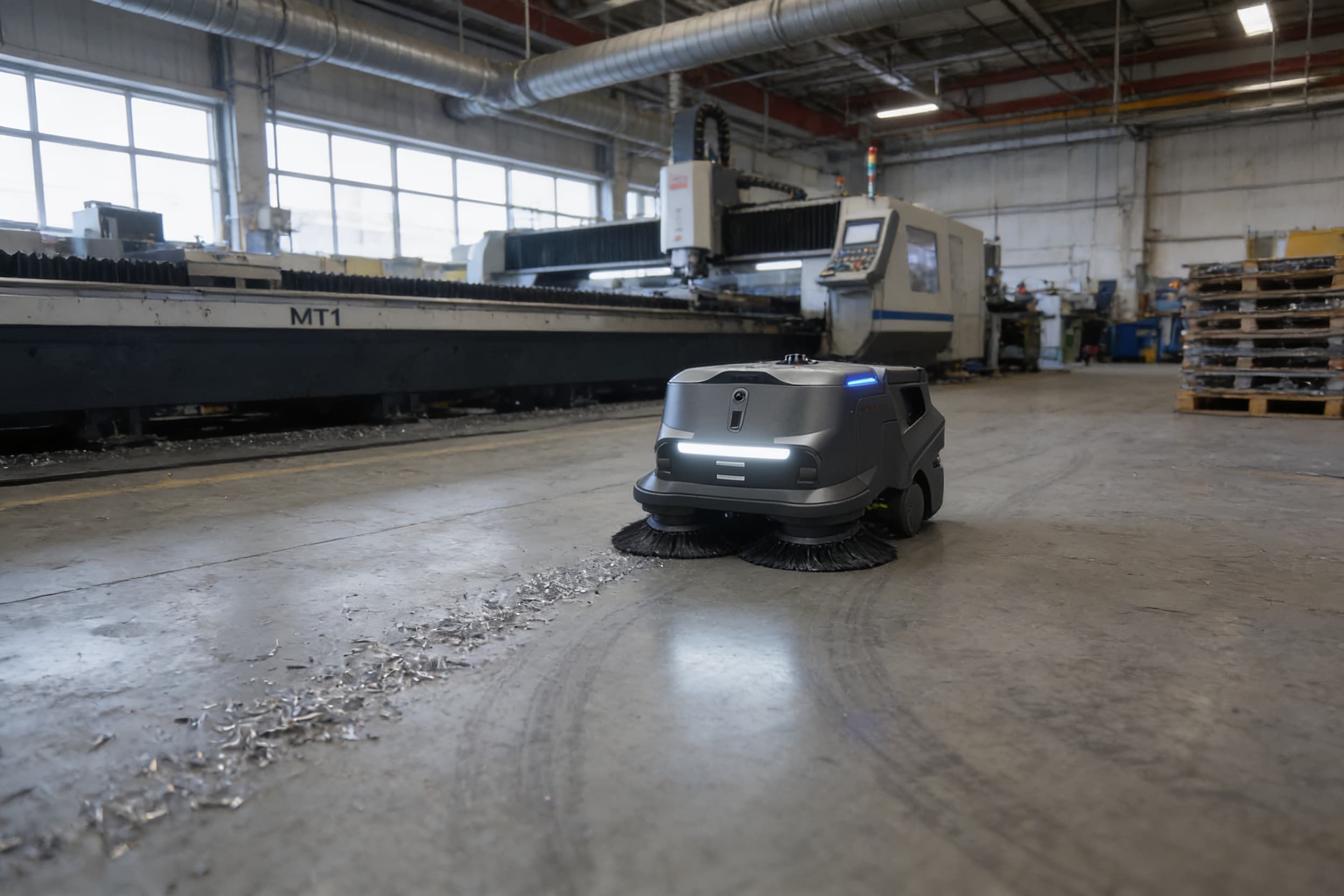
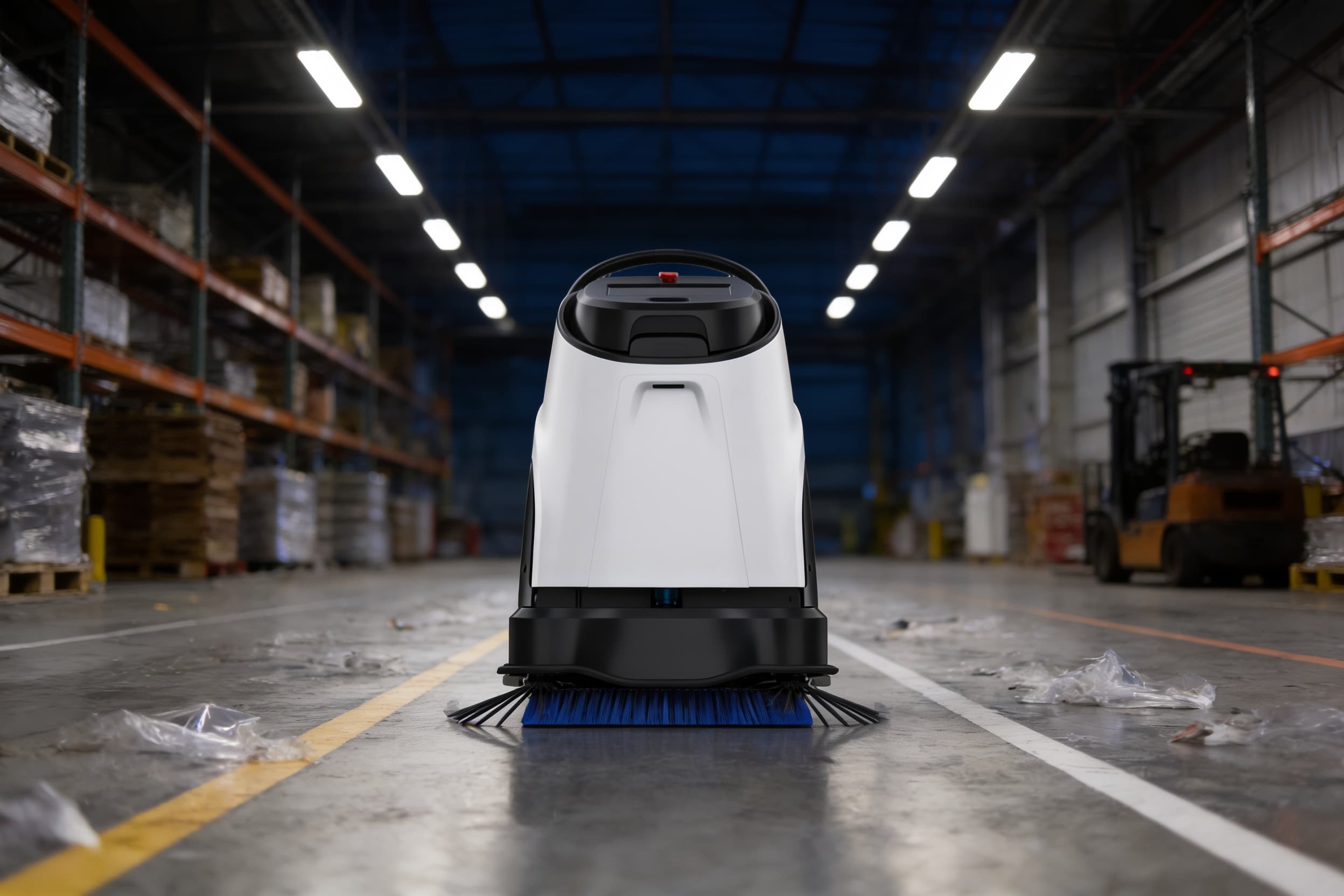
Floor scrubber on an auto-assembly plant floor near the line
Assembly plant floor
No. 02The shift

A shift on your plant floor

From line start to lights out, here is where the dull and dangerous work automates.

  1. Stage 01

    Line start

    Parts and raw material stage out to the cells before the shift.

    What the robot takes

    AMRs run the line-feed routes so the shift starts full.

  2. Stage 02

    Machine tending

    Someone loads and unloads the same machine, part after part.

    What the robot takes

    A cobot tends the machine through the whole shift.

  3. Stage 03

    Material flow

    Work-in-progress moves between cells and lines all day.

    What the robot takes

    AMRs and tuggers carry it without tying up a forklift driver.

  4. Stage 04

    End of line

    Finished goods get packed, palletized, and staged for the dock.

    What the robot takes

    A palletizing cobot stacks the heavy, repetitive loads.

  5. Stage 05

    Between shifts

    Aisles need cleaning and quality needs checking.

    What the robot takes

    A scrubber runs the aisles; inspection units watch the line.

Field notes

Cited industry data · no house numbers

1.9M

US manufacturing jobs projected unfilled by 2033.

Deloitte & The Manufacturing Institute, 2024

18.9%

Annual cobot market growth through 2030.

MarketsandMarkets, 2026

$5.7B

The cobot market by 2031, roughly triple today.

Mordor Intelligence, 2026

No. 03The crew

The crew that works here.

Each one bought or leased, deployed by us, and backed by RoboCare™.

See the lineup
  1. CobotsCollaborative arms for machine tending, packing, and repetitive tasks.
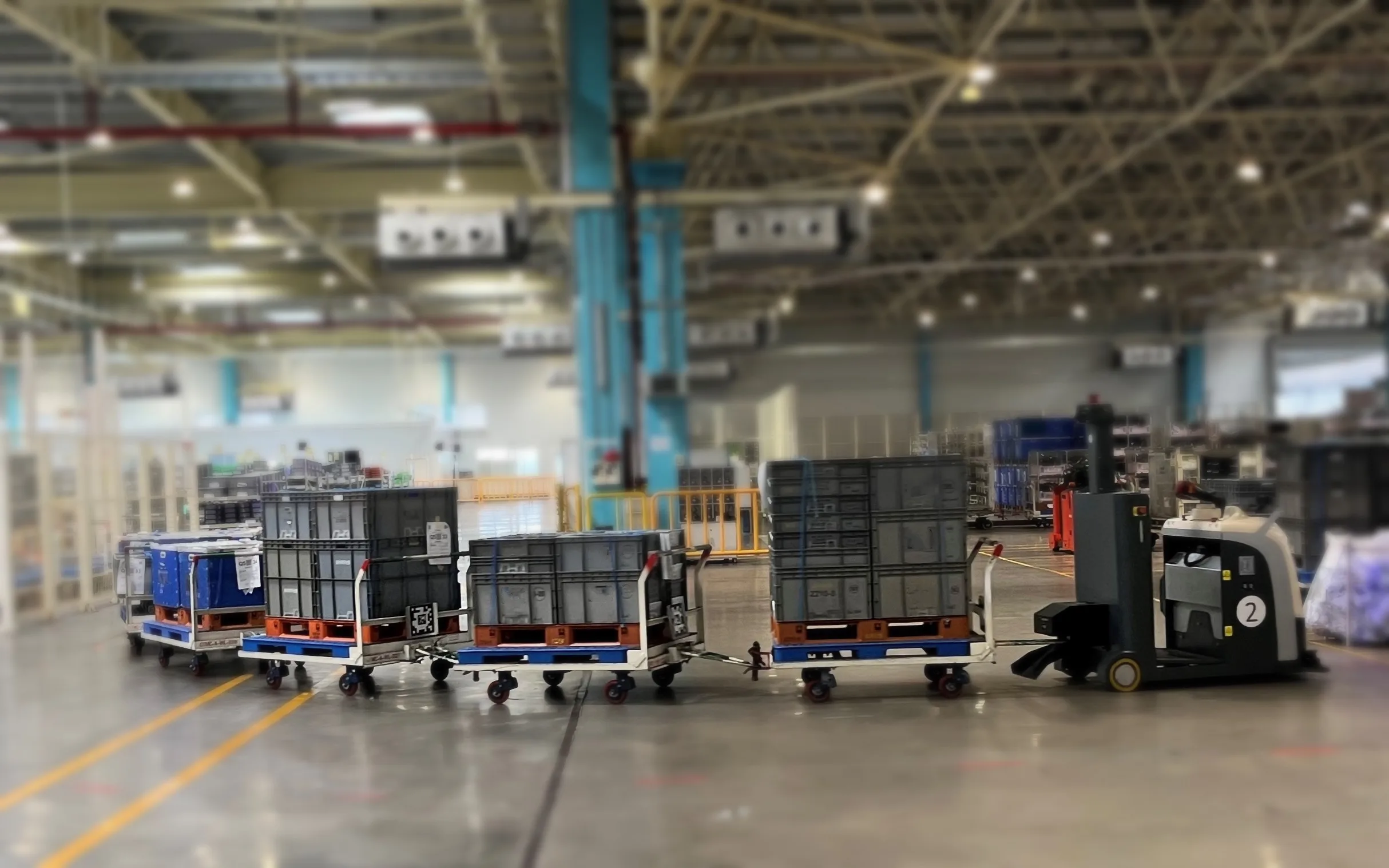
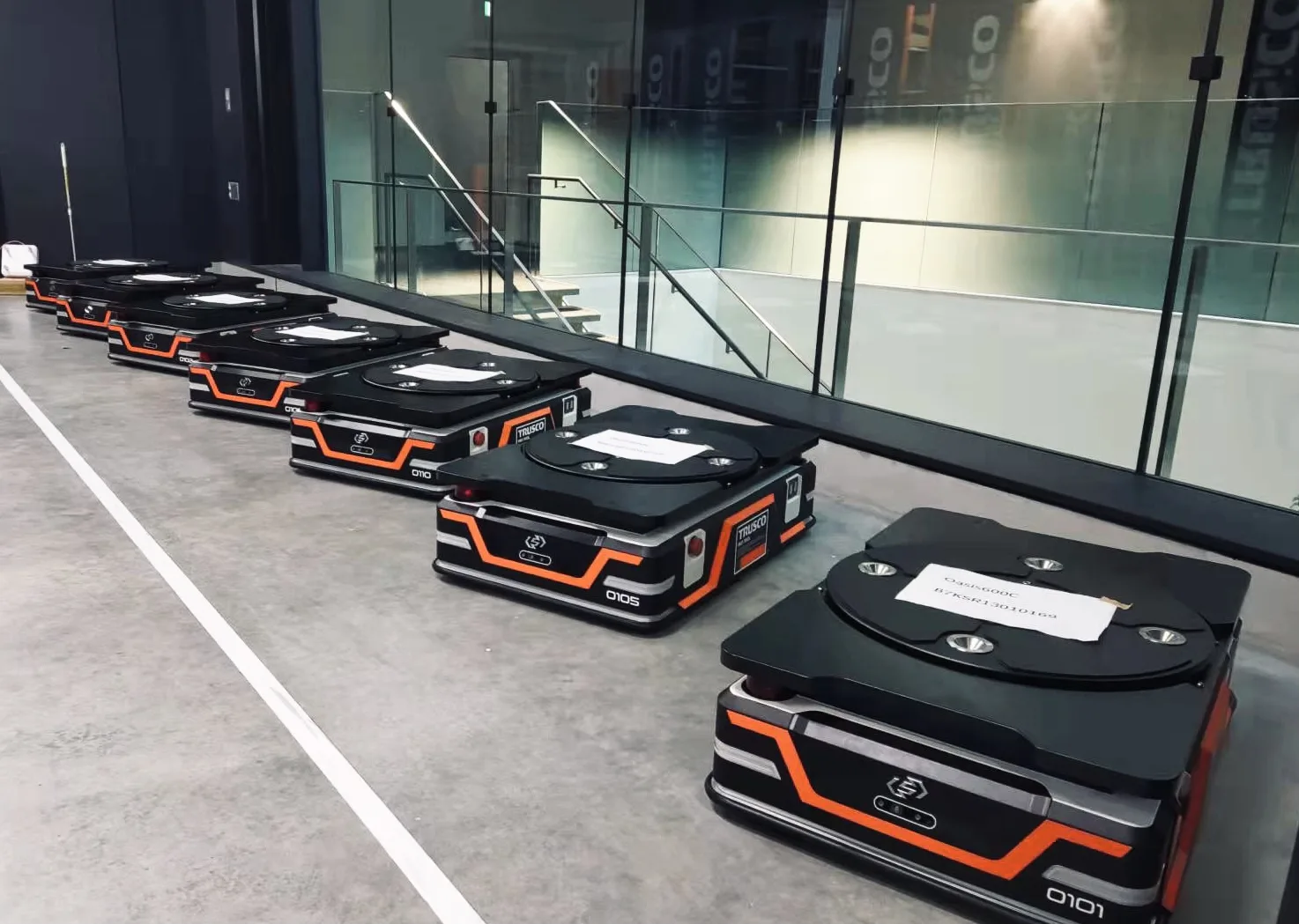
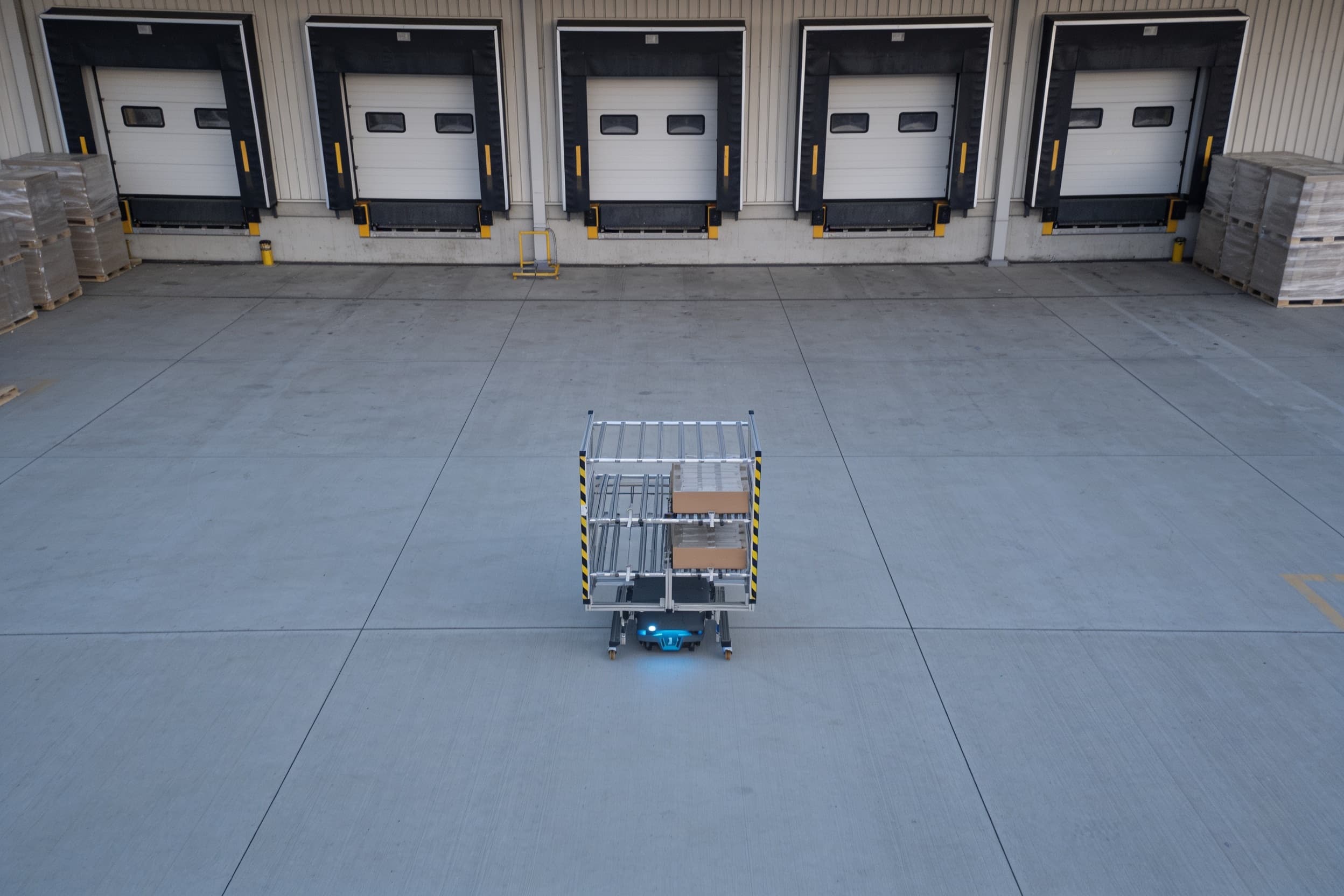
  2. Mobile robot carrying a cart across a warehouse cross-dockAutonomous mobile robotsAMRs that move pallets, totes, and carts across a warehouse floor.
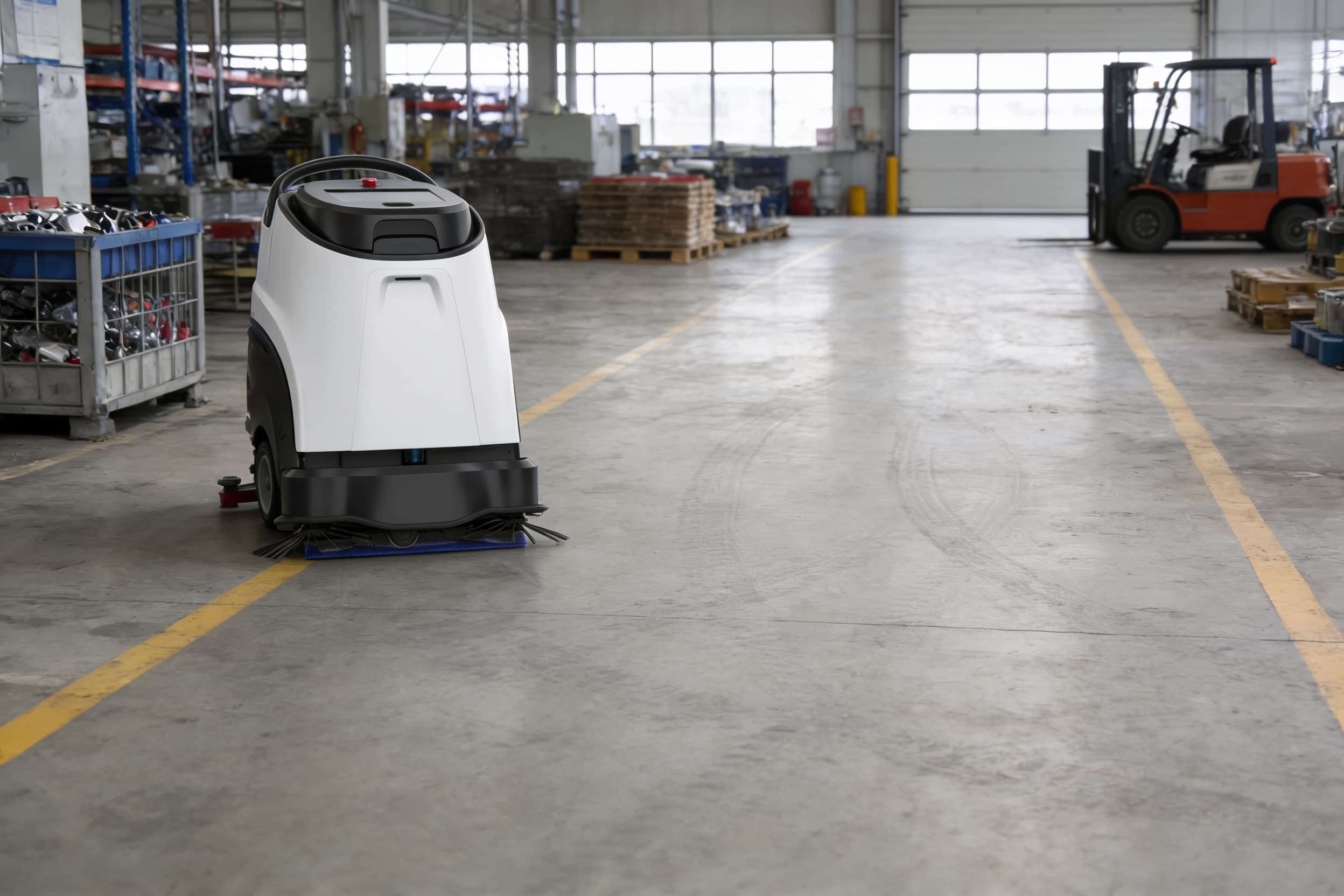
  3. Large-area scrubber in a distribution-warehouse aisleCleaning robotsAutonomous floor scrubbers and vacuums for large commercial spaces.
  4. Autonomous forkliftsForklifts and tuggers that lift, haul, and stage pallets without a driver.
  5. And moreThe full lineup, from scrubbers to humanoids, every one serviced nationwide.
No. 04The site survey

What decides whether it works.

The things we check on a walkthrough, before anyone talks about robots.

  1. 01

    The cell

    Cobot at a station or fenced arm, set by payload and the work. The cell layout decides it.

  2. 02
    Mobile robot carrying a cart across a warehouse cross-dock

    The aisles

    Parts and work-in-progress move between cells all shift. Aisles and routes set which mover fits.

  3. 03

    The integration

    Cobots and AMRs connect to line controls and safety systems during deployment, not bolted on after.

No. 05Up close

A closer look.

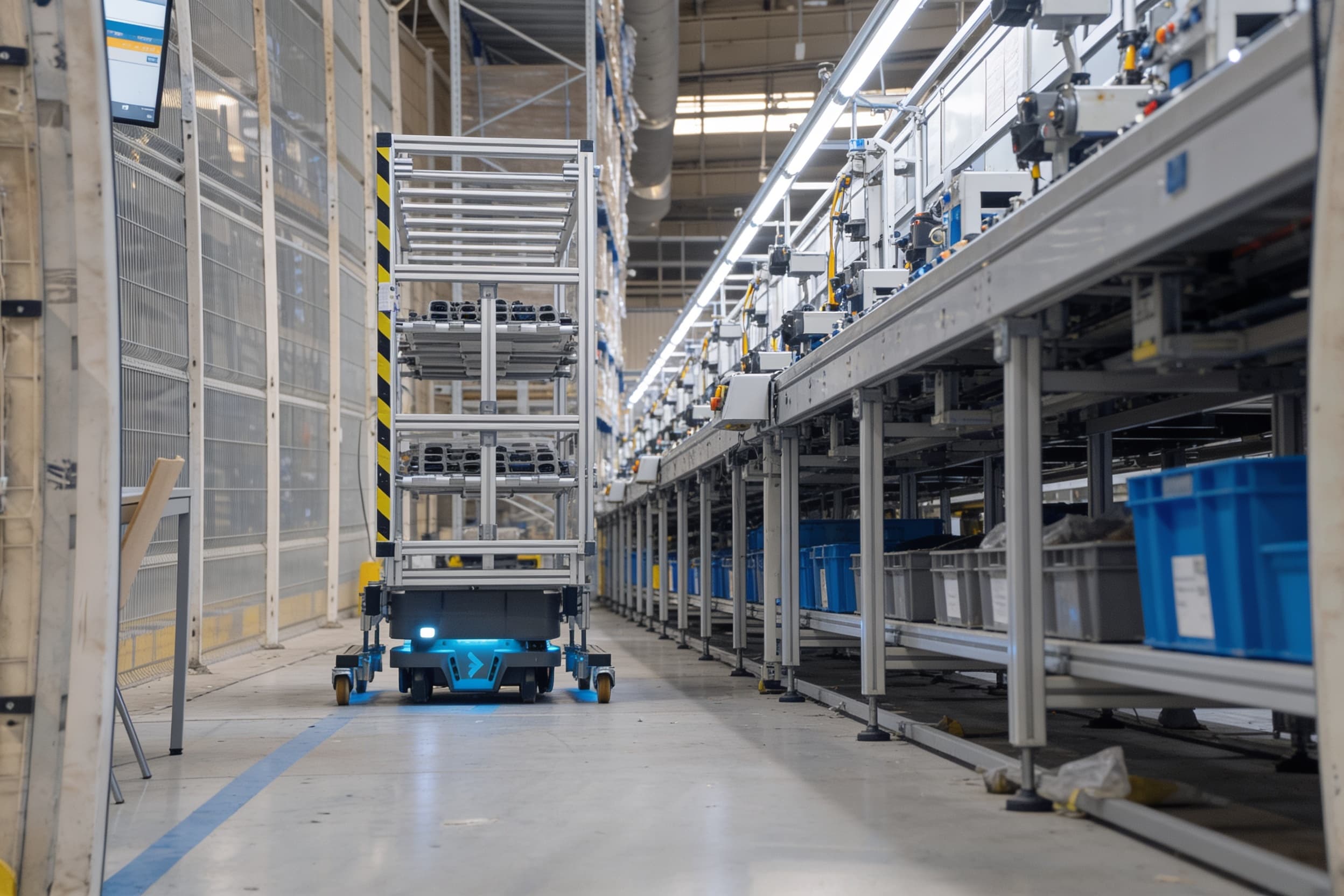
Mobile robot transporting a parts cart beside an assembly line

Cobot or a fenced industrial arm - which fits your cell

A cobot works right next to your team without a cage, hand-guides to teach a new task, and redeploys in hours - the right fit for lighter, changing work at a station. A traditional industrial arm needs a fenced cell but runs heavier and faster on a fixed job. Most plants end up mixing both across a floor. Our Industrial Arms & Cobots page has the full deploy-and-service picture; our cobots-vs-industrial-arms comparison lays the decision out side by side.
Buy it or lease it

A cell, a fleet of AMRs, or a scrubber can land as one capital hit or a monthly line item - your CFO picks the structure. Financing without a large up-front project is why a single line, or a whole plant, can automate now instead of waiting on next year’s capital budget. We surface the buy-vs-lease math for your equipment mix in a quote; cobot and arm pricing in particular is set per cell, not published, because payload, tooling, and integration change it too much for a rate card.

The case for automating the line

The payback on a plant floor is driven by the roles you cannot fill and the tasks that hurt people, not just a labor rate. Machine tending, palletizing, and packing wear people out and cause injuries; moving parts between cells eats labor and creates bottlenecks; a missed defect is expensive after it ships. A robot that takes that work back gives those hours to the jobs that need judgment and takes the most injury-prone motion off your people.

Cobot and arm pricing is set per cell - payload, tooling, and integration change it too much to publish a rate. What we can say plainly: financing (buy or lease) means a line does not have to land as one capital project, and running multiple plants means one partner carries integration and uptime risk everywhere instead of a different vendor per site.

  • Payback drivers: hard-to-fill roles, injury-risk reduction, fewer missed defects, less line downtime.
  • Cobot/arm pricing is quoted per cell - not a published rate card.
  • Financing (buy, lease, monthly) avoids one large capital hit.
  • These are illustrative framings, not a guaranteed result - see a quote for your line.

Why a plant should automate through an integrator, not a bare OEM

An arm, an AMR, and an inspection unit are three different OEMs, plus a safety sign-off, plus financing, plus whoever fixes it at 2am when a line stops. Stitching that together and owning the downtime risk is a heavy lift for a plant that already has a line to run.

Service Robot Co. is the one vendor for all of it, and OEM-neutral about which unit. We select the mix - cobots for stations, AMRs and forklifts for material flow, inspection for quality - model the cell before we build it, finance it, deploy alongside a running line, train your operators, and service it nationwide. Running several plants? We standardize the same program across every site, with one partner carrying integration and uptime risk everywhere.

No. 06The requirements

What a plant actually needs from a robot

A robot on a manufacturing floor has to fit the cell, keep the line running, and not require a construction project to install.

  1. Fit to the process

    cobots for stations and machine tending, AMRs and forklifts for material flow between cells, inspection units for quality, scrubbers for the aisles. Match the mix to your layout, not a single SKU.

  2. No shutdown to deploy

    we map, route, and commission alongside a running line wherever the job allows; a robot that stops the line to install defeats the point.

  3. MES and line integration where it pays

    cobots and AMRs connect to your MES, line controls, and safety systems during deployment, not bolted on after.

  4. Uptime, not just capability

    a down robot cannot be allowed to stop a line; fast support matters as much as the spec.

  5. Multi-plant consistency

    a manufacturer running several sites wants one partner carrying integration and uptime risk everywhere, not a different vendor per plant.

No. 07Compare the options

Manufacturing robots by job

The robot categories a plant uses, with representative units and what the mix does on your floor. Names are illustrative examples, not a guarantee of the model or terms for your line.

JobRobot typeRepresentative unitDeployment
Tend a machine, palletize, pack, weldCobot / industrial armCollaborative and industrial-arm robotsFenced cell or no-cage station
Move parts & WIP between cellsAMRAMR-class pallet & tote moversNone - free navigation
Line-side-to-dock pallet movesAutonomous forklift / tuggerAutonomous forklifts, collaborative tuggersMinimal - vision-guided or learns the route
Catch defects, inspect confined spacesInspection / quality robotMachine-vision systems, inspection crawlersMounted in-line, or walked in for confined spaces
Clean production aislesAutonomous scrubberA large-area scrubber and a compact combo scrubberNone - runs your aisles overnight

Illustrative only - representative units and categories, not quotes or guaranteed specs. Cobot and arm pricing is set per cell (payload, tooling, integration) and quoted, not published. We confirm the exact model, deployment requirement, and terms for your plant in a quote.

No. 08The cost picture

Buy it, or lease it.

Buy the robot outright, or lease it through financing. The two side by side, point by point.

Lease it through financing

Keep your capital. RoboCare™ keeps it running.

  • Upfront cost

    A monthly payment through financing.

  • Capital

    Stays free for the rest of the business.

  • Service

    RoboCare™: 24/7 support with 10-minute triage, 3 check visits a year, 12-month warranty.

  • Maintenance

    Preventive maintenance and consumables in Base Care or Full Care.

  • Growing

    Add units as the work grows.

Buy it outright

The machine is yours. RoboCare™ keeps it running.

  • Upfront cost

    The full price, up front.

  • Capital

    Goes into the machine.

  • Service

    RoboCare™: 24/7 support with 10-minute triage, 3 check visits a year, 12-month warranty.

  • Maintenance

    Preventive maintenance and consumables in Base Care or Full Care.

  • Growing

    Add units as the work grows.

Each robot has its own price. We quote the real number for your site after a free site assessment.

Want the full math? The robot pricing guide has real ranges by robot type and the buy-vs-lease breakdown.

Honest fit check

When a manufacturing robot is the wrong call

Plant automation is real, but it is not universal:

  • Your product mix and changeover are so frequent that no single task holds still long enough to automate.
  • Volume on the task is low and irregular - the payback stretches past the point it makes sense.
  • You need it live next week - cell integration, safety sign-off, and line commissioning take real time.
  • No one on site will own day-to-day operation and safety oversight - these run on and around a live production line.
  • The only viable deployment needs a shutdown or a rebuild you cannot justify right now.

RoboCare™

Service nationwide.

All 50US states covered
10 min24/7 triage
Regionalservice engineers in every state we service
24/7emergency response
  • 24/7 support.
  • 10-minute technical-specialist triage.
  • Regional service engineers in every state we service.
  • 3 check visits a year.
  • 12-month warranty.
No. 09On site

Where you'll see it working.

Mobile robot transporting a parts cart beside an assembly line
Line-side transport
Floor scrubber on an auto-assembly plant floor near the line
Assembly plant floor
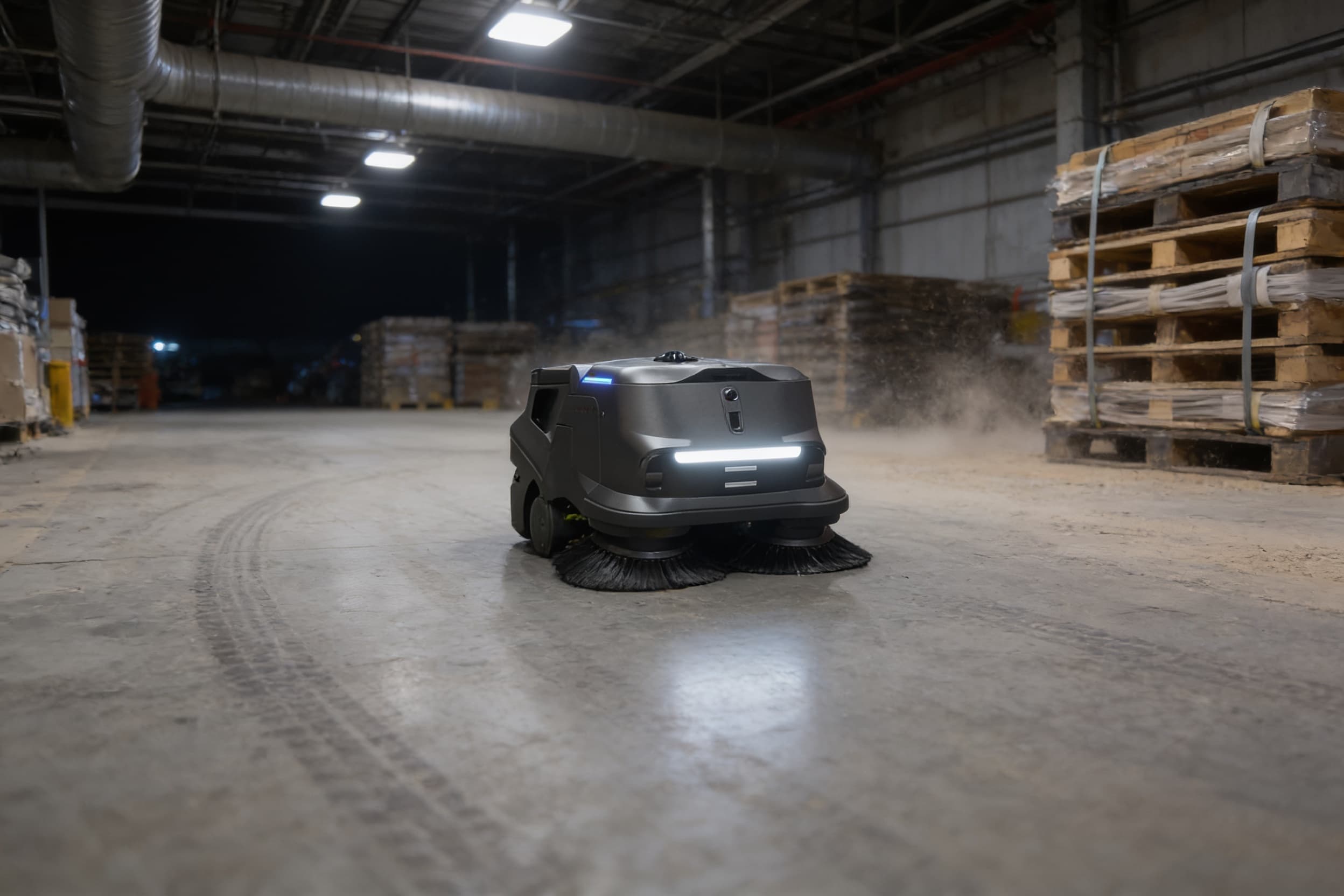
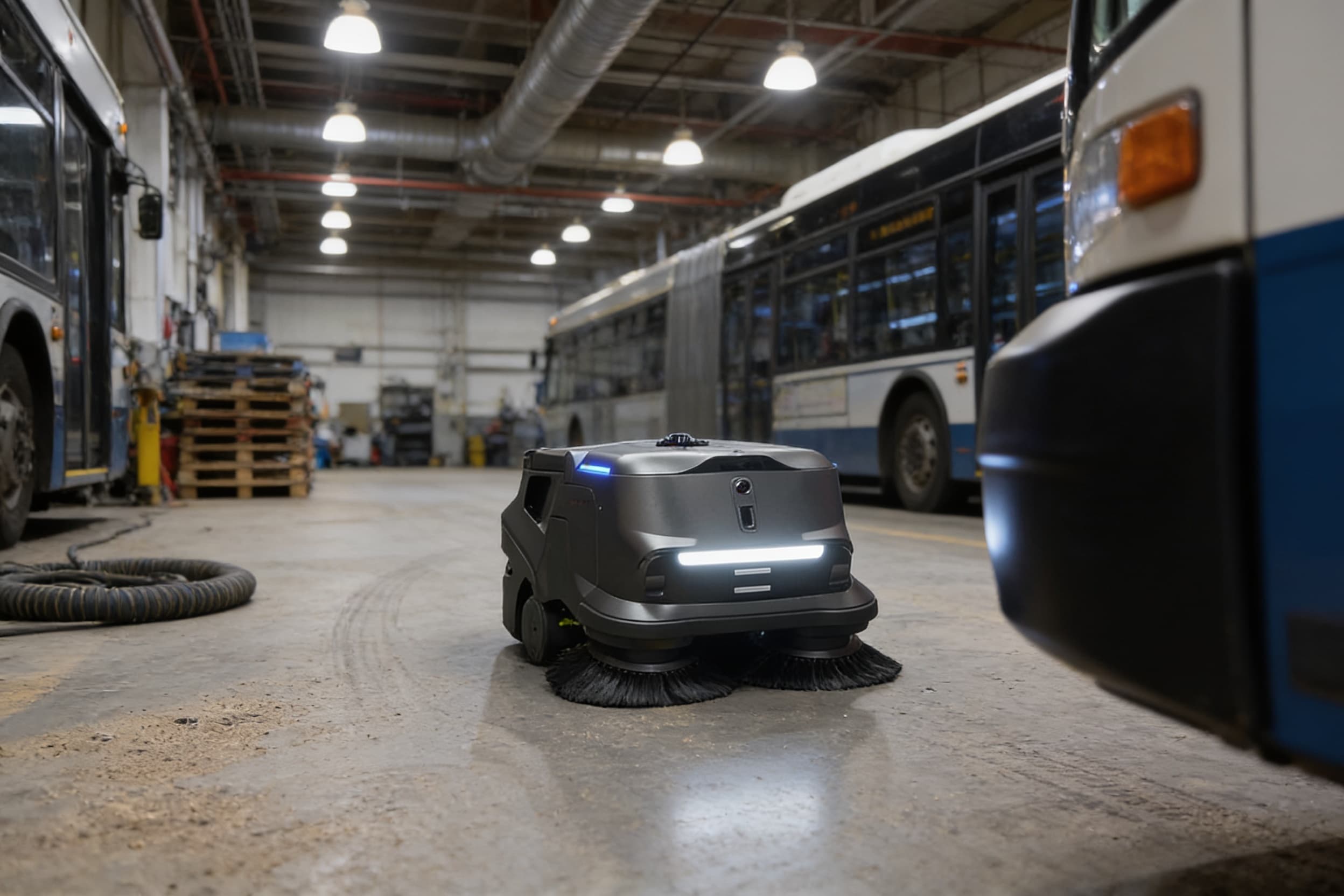
Sweeper robot working a maintenance-bay floor
Maintenance bay
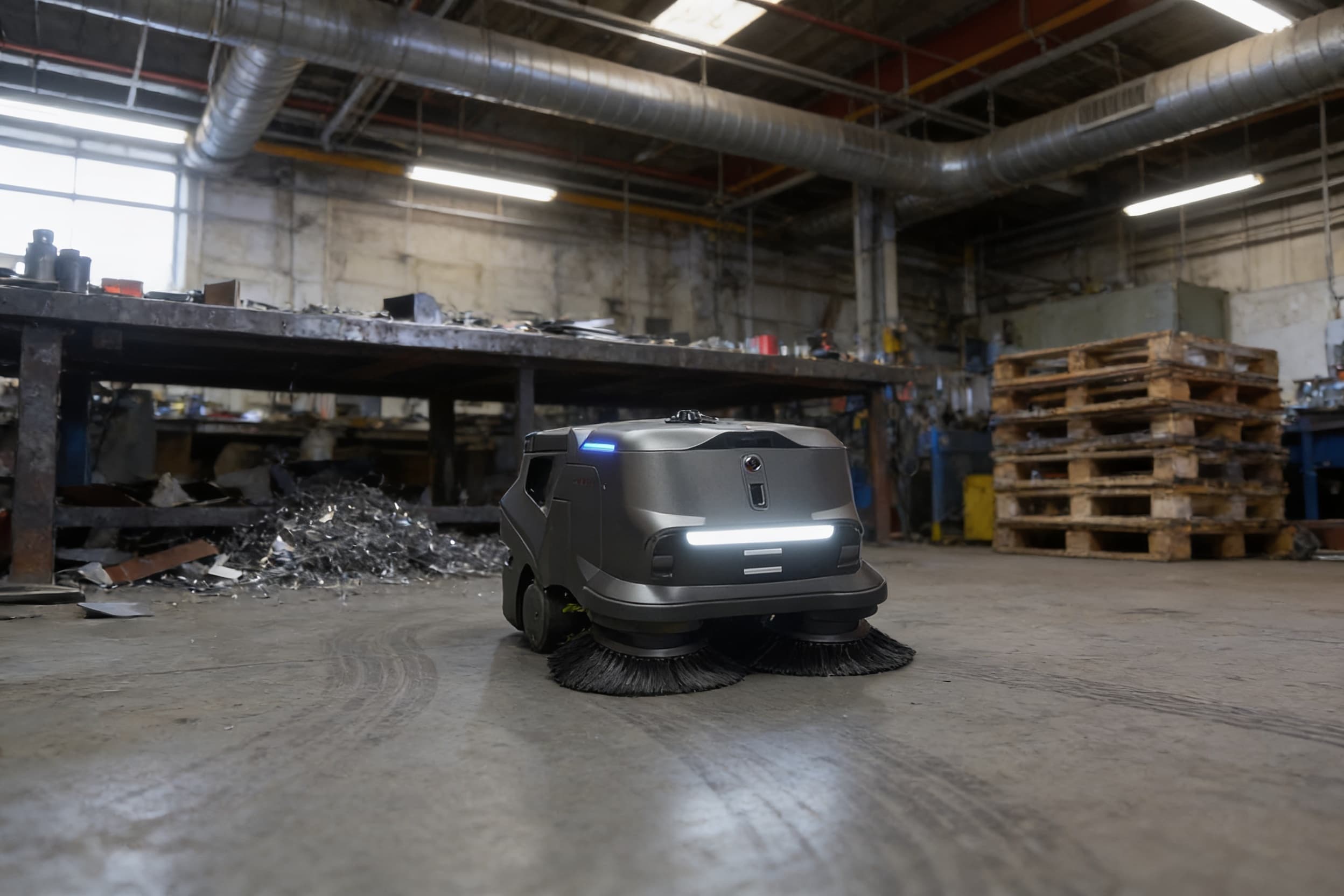
Sweeper robot on a metal-fabrication shop floor
Fab shop
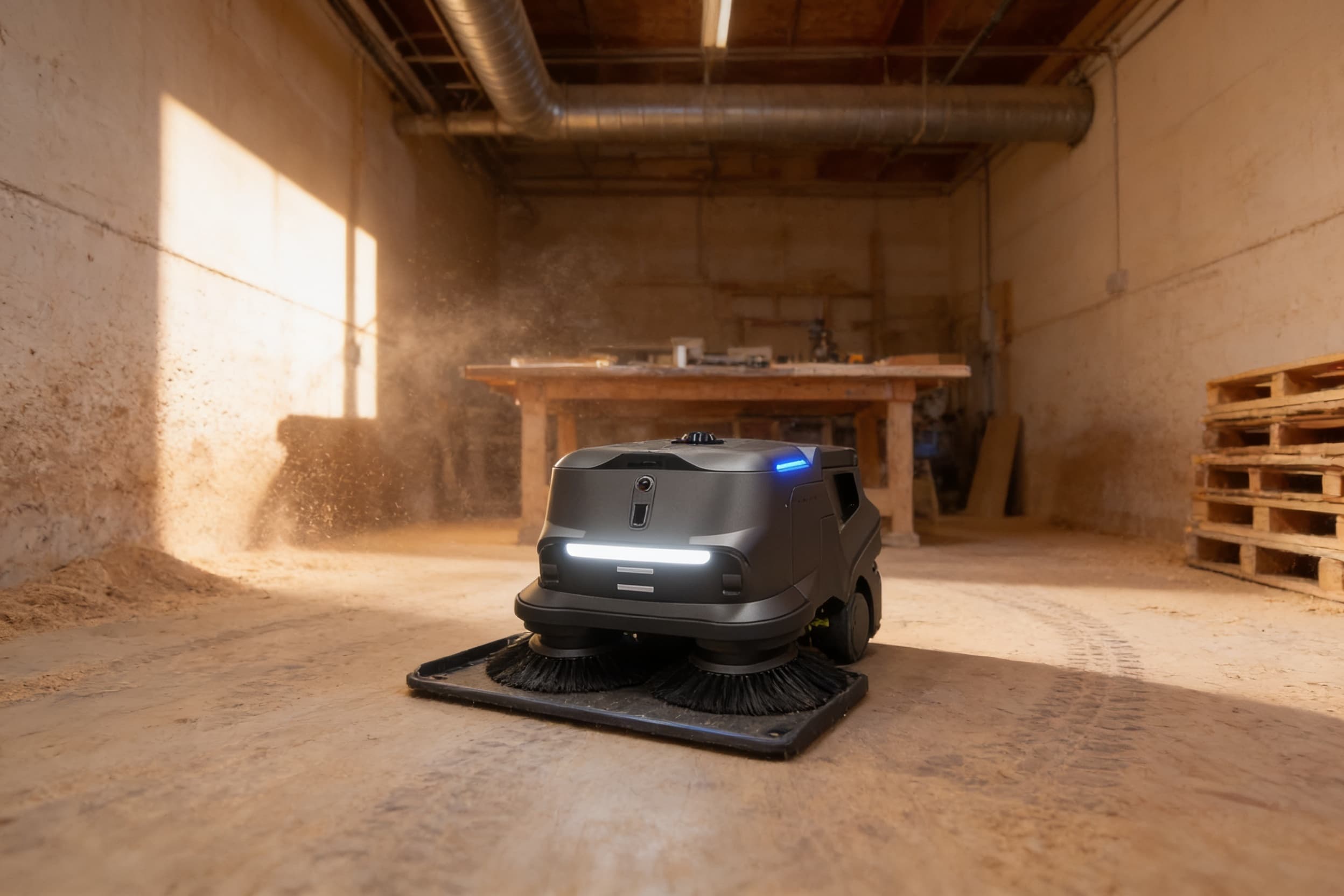
Sweeper robot in a woodworking shop
Woodshop
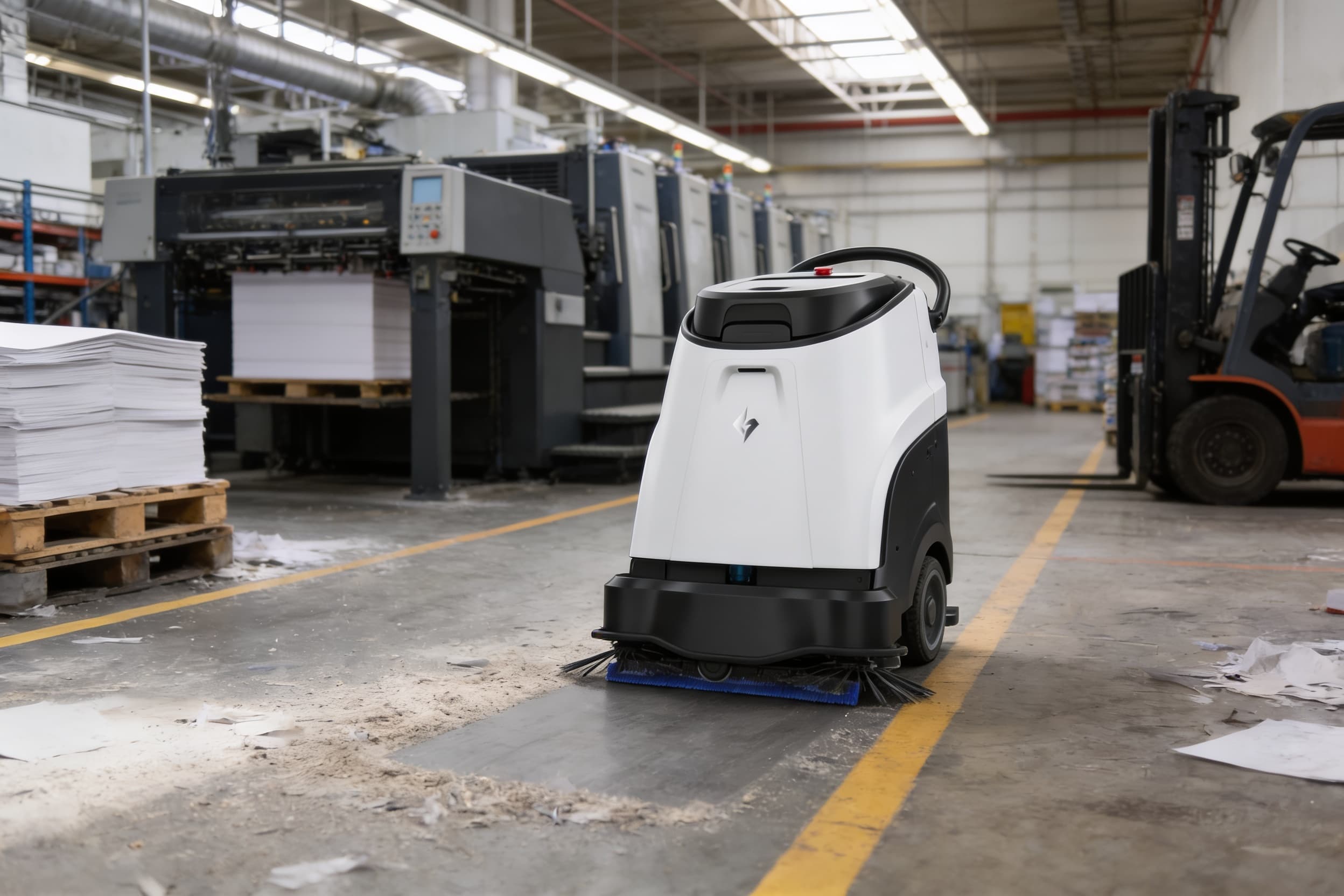
Floor scrubber beside a printing press line
Press line, day shift
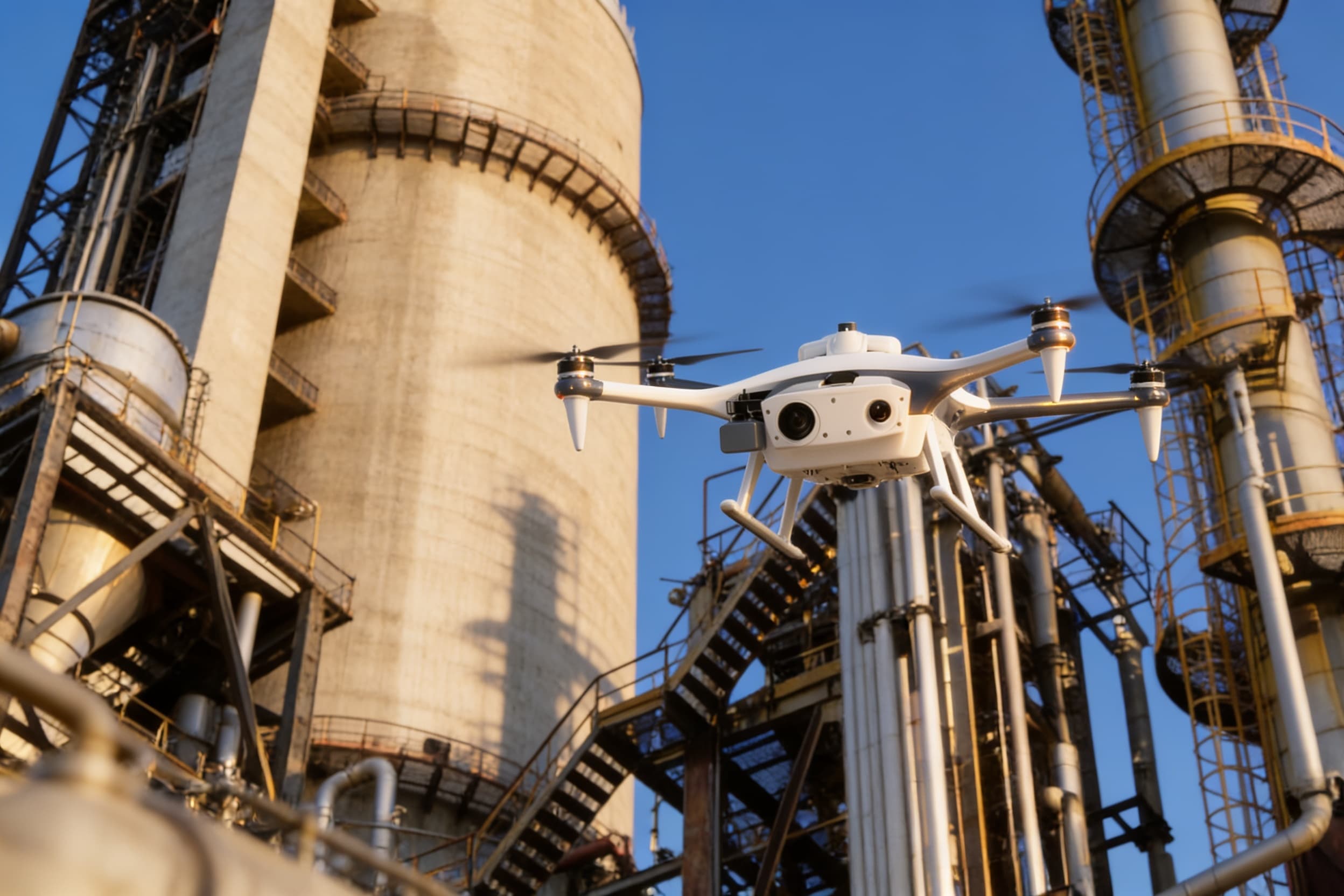
Inspection drone beside an industrial refinery structure
Industrial inspection
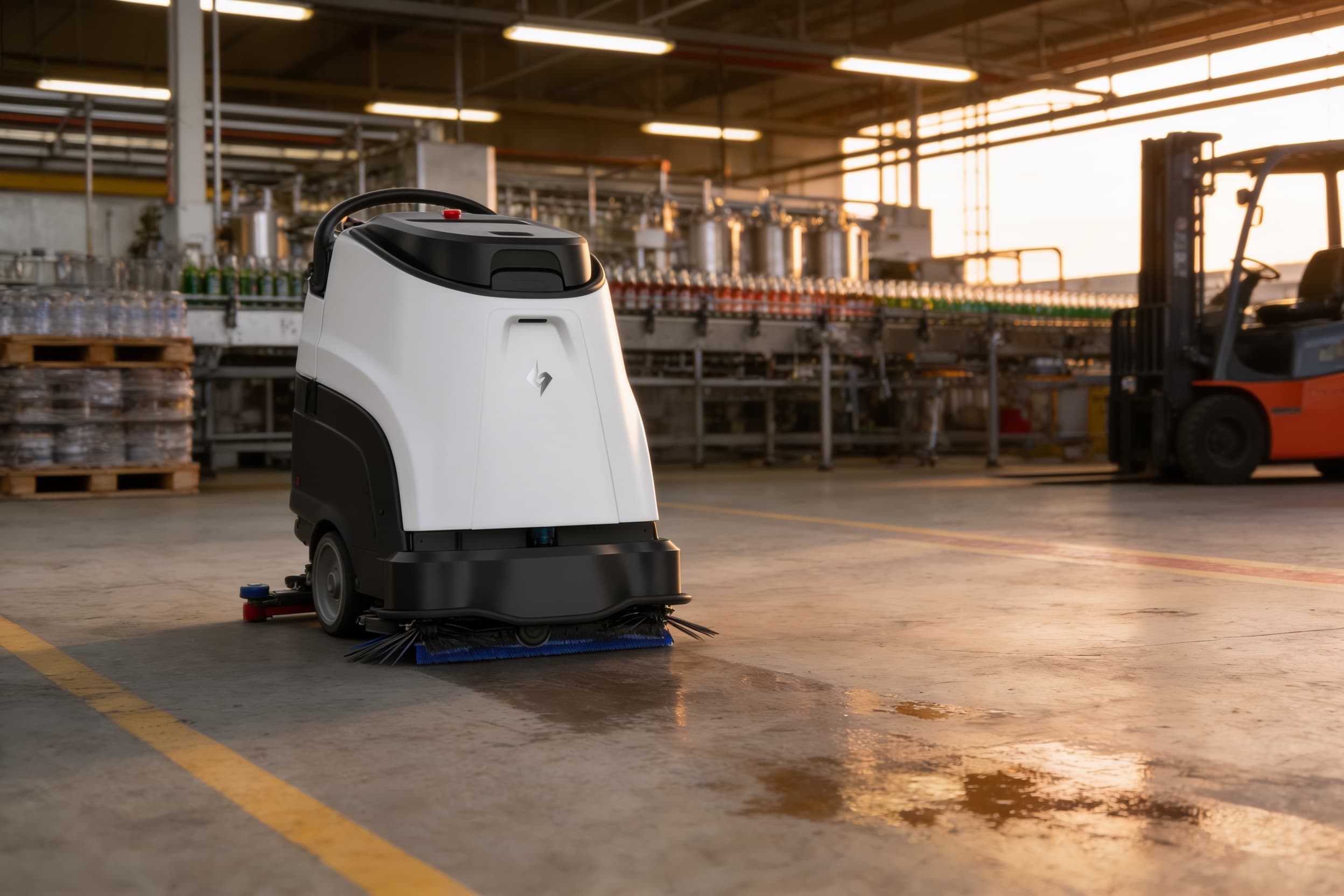
Floor scrubber on a bottling-plant floor
Bottling line, afternoon
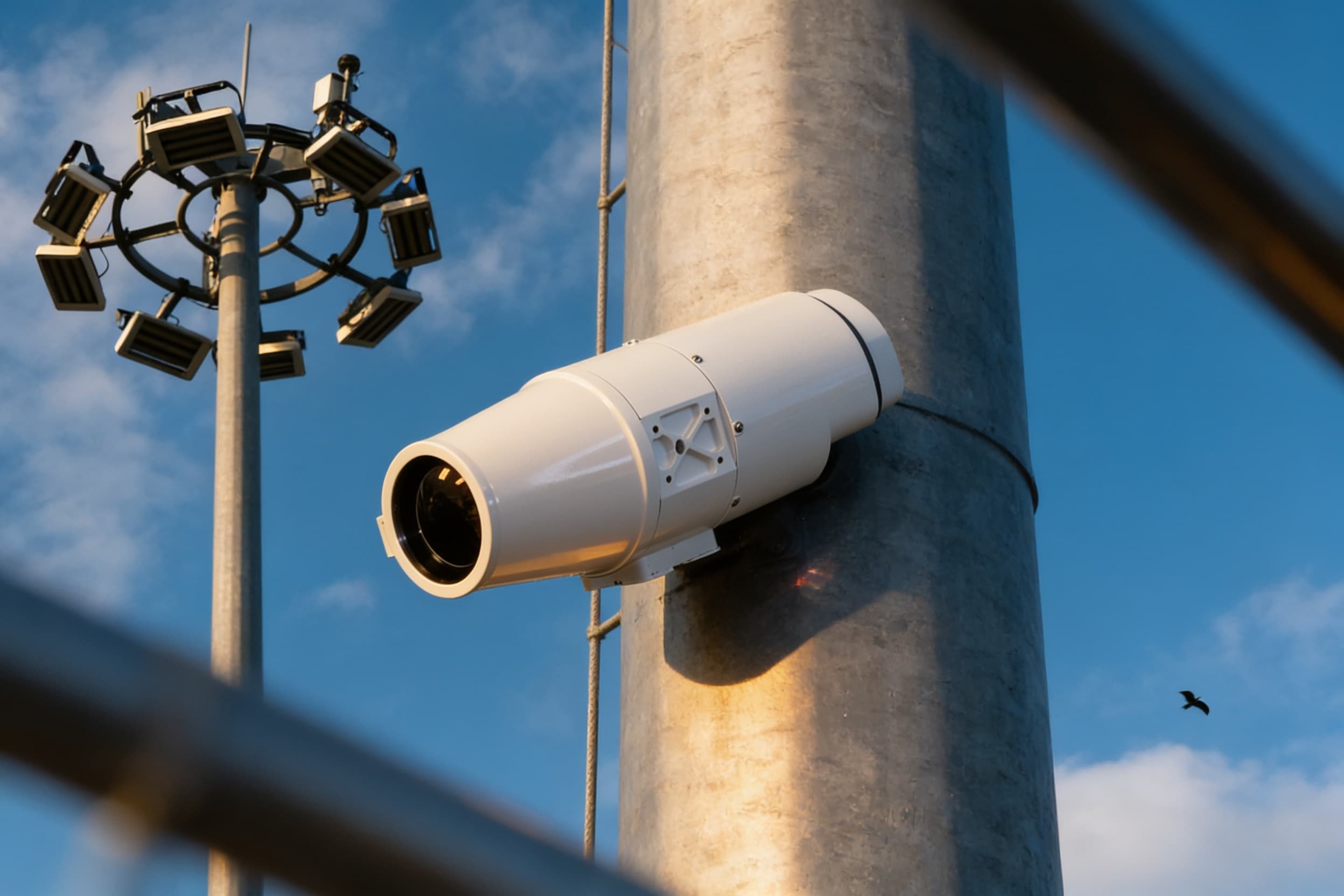
A security camera mounted on the mast against the sky
Perimeter camera
No. 10Proof

Deployments we can point to.

A food manufacturing packaging area like the doypack lines where operators once stacked cases by hand.Lead case study10,780 Daily motions removedHow an Andean Food Plant Eliminated 10,780 Daily Lifts With One Cobot PalletizerA high-volume Andean food-ingredients plant cut 10,780 repetitive palletizing motions to zero, reassigning two workers while running 32 SKUs at 10 cycles per minute.Read the case study
  1. How a Deli-Meat Plant Cut Daily Labor Costs 20% with Cobot PalletizersA Midwest deli-meat plant deployed five cobot palletizers over two weekends and reported 20% lower daily labor-related OpEx while upskilling operators.20% Labor OpEx cut
  2. How a Label Plant Halved End-of-Line Staffing and Beat Its Cycle TargetA Wisconsin label plant cut end-of-line staffing from two operators to one and improved cycle time from a 4.5-second target to 4.2 seconds with a compact packing cell.2→1 Operators
No. 11From our blog

Reading for the decision you are making.

All articles

October 2026 — December 2027

Events

  1. OCT18–212026

    Chicago, ILPackaging & manufacturing

    PACK EXPO International 2026

    The biggest U.S. packaging and processing show, with automation buyers across the floor.

  2. OCT20–212026

    Santa Clara, CARobotics & automation

    RoboBusiness 2026

    Robotics and AMR industry expo for platform, integration, and OEM conversations.

  3. APR19–212027

    Chicago, ILRobotics & automation

    ProMat 2027

    Warehouse automation show for AMR, material-handling, and forklift buyers.

  4. MAY10–132027

    Las Vegas, NVRobotics & automation

    Automate 2027

    A3’s flagship U.S. robotics and automation show.

Common questions

Yes. We map the floor, set material routes, and commission cells and AMRs alongside a running line wherever the job allows - production does not have to stop to automate.

Want one working for you?

We walk your site, learn the job, and tell you which unit fits, OEM-neutrally, before you commit a dollar. If nothing fits yet, we say so.

Free site assessment. We tell you what actually works before you spend a dollar.